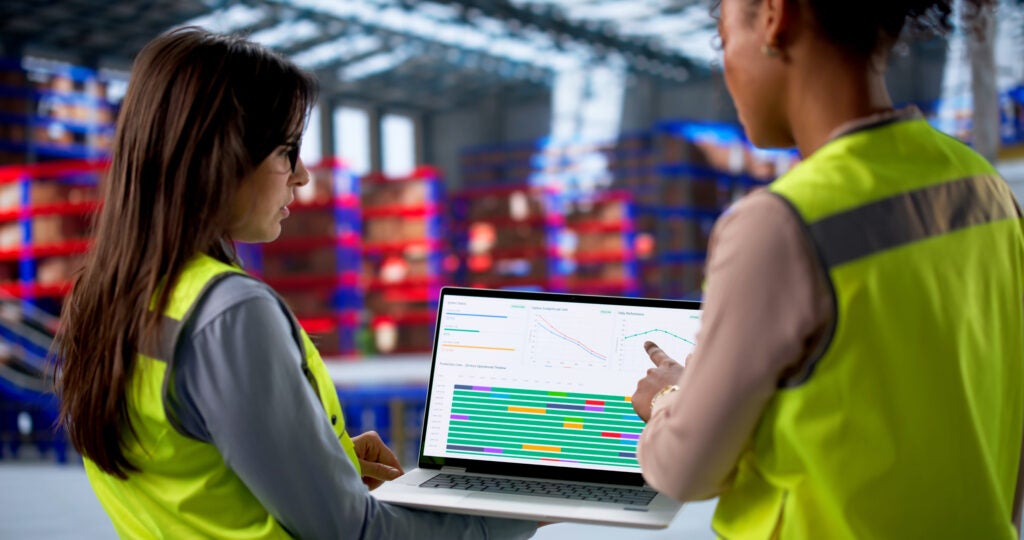
Global supply chains have always been tricky to manage, but recent market shifts have dramatically narrowed the margin for error. Tariff changes, port closures, and swings in customer demand can all cause sudden catastrophic disruptions. To keep goods moving smoothly while protecting profits, companies rely on supply chain optimization software to sync inventory levels with daily logistics.
As AI enters supply chain management, standard tracking platforms are becoming proactive decision engines. AI analyzes live operational data to spot potential bottlenecks before they disrupt customer deliveries.
AI is reshaping what supply chain software can deliver. This guide breaks down how smart software powers modern digital supply chain networks, from demand forecasting to risk detection, and why human leadership remains essential to optimizing these high-tech tools.
Develop Practical Supply Chain Strategy Skills Today
Build Skills in Sourcing, Logistics, and Risk Management
What Is Supply Chain Optimization Software?
Supply chain optimization software is business technology that plans and aligns the flow of goods and information from sourcing to final delivery. By evaluating operational data across supply networks, these tools give leaders real-time visibility and guide daily decisions.
Modern software suites, including advanced supply chain analytics software, help teams manage key operational functions, including:
- Demand forecasting: Predicting customer requirements to guide production schedules
- Inventory management: Balancing stock across fulfillment centers to prevent shortages
- Logistics and routing: Finding efficient shipping paths to reduce transportation costs
- Supplier coordination: Tracking vendor timelines and material movements
- Performance tracking: Monitoring key operational metrics to spot bottlenecks early
At a strategic level, supply chain software helps managers work through competing business tradeoffs. For example, cutting back on inventory lowers storage expenses but raises the likelihood of stockouts. Optimization software models these scenarios so leadership can protect profit margins without sacrificing customer satisfaction.
Technology solves only part of the puzzle, though. Software can easily flag a delayed shipment, but deciding whether to air-freight a replacement or switch to a backup vendor takes human judgment. As automated systems tackle more complex calculations, practical expertise in logistics and risk management becomes even more vital to running a reliable network.
How AI Is Transforming Supply Chain Management
Traditional supply chain systems relied on historical sales data and rigid business rules. Those legacy tools worked well enough during predictable times, but they struggled when buying habits shifted overnight or severe weather closed a major port.
Applying AI in supply chain management breaks that rigid approach. Machine learning lets software continuously adapt using new incoming data, creating several high-impact applications that handle:
- Predictive analytics: Estimating future demand and carrier delays to minimize inventory shortages
- Intelligent supply chain automation: Processing routine orders and flagging operational exceptions without manual intervention
- Real-time visibility: Continuously tracking inventory locations and shipment status across global networks
The latest shift in this space is agentic AI, where autonomous software agents execute multistep workflows on their own. Instead of just spitting out reports, these digital agents coordinate actual solutions when disruptions happen.
Modern technology supports human experts without taking over their jobs. Automated agents generate suggested plans, leaving managers to review recommendations and focus on long-term strategy. This balance creates strong demand for professionals who understand core supply chain operations and possess the digital skills needed to run advanced tools.
AI Applications Across the Supply Chain
Businesses now use artificial intelligence to optimize nearly every stage of the supply chain, from initial procurement through final fulfillment.
Demand Forecasting
Standard projections based only on last year’s numbers miss rapid market changes. Modern demand forecasting AI models blend past sales data with live variables like market trends and regional weather shifts. One example: Microsoft uses specialized demand-simulation agents for its data center hardware, boosting accuracy while cutting manual reconciliation time. Precise forecasts help companies match production schedules with actual customer orders.
Inventory Optimization
Carrying too much stock locks up cash, while empty shelves mean lost sales. Intelligent software maintains balance by tracking inventory across fulfillment sites and suggesting real-time stock reallocations.
Risk Detection
AI scans global data feeds to catch operational disruptions early. When a key supplier misses a delivery deadline, AI agents evaluate recovery options like partial shipments or adjusted production schedules and give managers ranked action plans within an hour.
Supplier Performance and Procurement
Sourcing teams use AI to track vendor reliability, analyze spending patterns, and run automatic price comparisons. By pairing supplier details with live demand forecasts, procurement managers can evaluate vendors thoroughly and negotiate terms before material shortages hit.
Transportation and Logistics
Routing, carrier capacity planning, and warehouse tasks benefit from continuous AI modeling. Logistics provider C.H. Robinson found that truckload shipments using AI-assisted scheduling reached their destinations 11 percent faster on average.
Real-Time Visibility
AI supply chain software replaces static monthly spreadsheets with continuous live tracking. Operations teams spot emerging bottlenecks early and adjust workflows before small delays disrupt the broader network.
Across every application, smart companies use AI to sharpen strategic decision-making.
Benefits of AI-Powered Supply Chain Optimization
The main benefits of AI in supply chain management include:
- Higher forecast accuracy that aligns inventory directly with live market demand
- Faster decision-making to evaluate complex operational scenarios in real time
- Lower operating costs by reducing administrative work and simplifying logistics
- Stronger resilience by detecting potential risks before disruptions derail fulfillment
The financial results can be impressive. A BCG study shows that 44 percent of companies deploy AI in their supply chains. In one consumer goods project, AI-driven stock replenishment boosted customer fill rates while cutting administrative costs by 40-60 percent.
Yet results vary widely. The same BCG report noted that most companies “remain stuck on narrow use cases and copilot-style tools that deliver only marginal productivity gains.” BCG’s 2026 research on supply chain planning echoed this: success depends less on access to technology than on how well companies build these systems into everyday decisions.
In the end, people matter. Companies need managers who can interpret AI-generated insights, question algorithmic recommendations, and support broader supply chain management strategy.
Building Modern Supply Chain Skills Through Professional Development
For professionals looking to better understand operations and supply chain strategy, Washington State University Carson College of Business offers a fully online Supply Chain Management Fundamentals Certificate. It focuses on core supply chain skills that apply no matter what software an organization uses.
The program includes five self-paced modules:
- Supply Chain Strategies and Concepts
- Sourcing
- Logistics Management
- Supply Chain Risk
- Supply Chain Metrics
Designed by faculty with input from an industry advisory committee, the coursework reflects the real workplace challenges managers handle every day. Each module also includes a curated set of blog articles, podcasts, and YouTube videos on current supply chain issues, so learners see how companies handle sourcing, logistics, and risk decisions today. Students practice quantitative methods for forecasting and risk management through hands-on Excel exercises and realistic business scenarios. While select assignments encourage exploring AI tools, the focus remains on fundamentals that build a strong grasp of strategy, logistics, and performance metrics so students can evaluate AI suggestions and use emerging technology effectively.
Built for busy schedules, each self-paced module takes about five to six hours. Most students earn the full supply chain management certificate in 25 to 30 hours. With no prerequisites or degree requirements, the program suits a range of roles, including logistics coordinators, procurement managers, and cross-functional team members stepping into supply chain duties.
As software platforms keep evolving, professionals who understand core supply chain fundamentals will be best prepared to lead. Explore WSU Carson College of Business online certificates to find a program that fits your professional development goals.
